
Sonny Digital
The bass architect who taught Travis Scott's 808s to scream in frequencies the chest can feel.

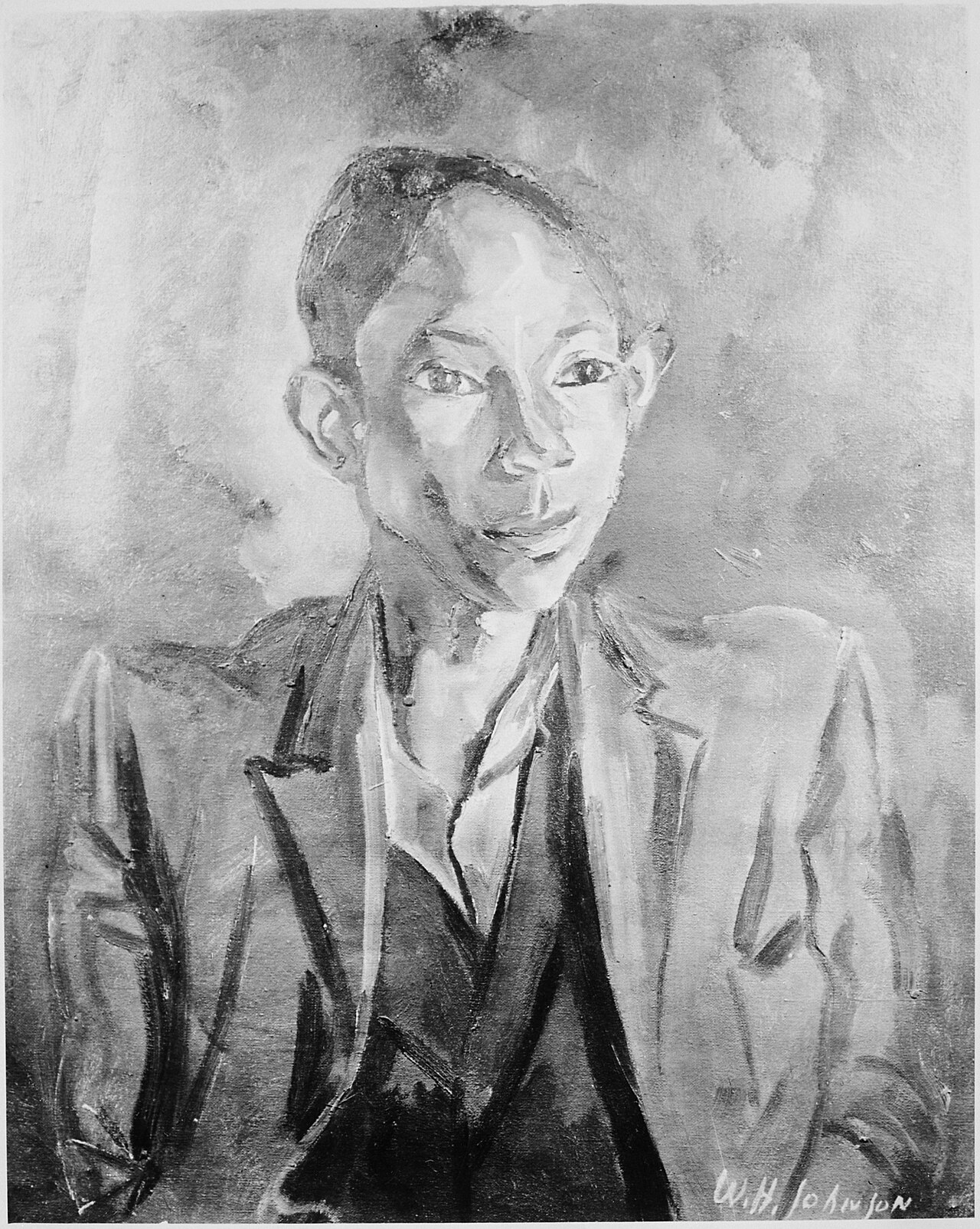
Edmondson, George Mountain, 1866-1948 · Public domain
Sonny Digital is a music producer and DJ whose electronic, bass-heavy production has found a natural home within Travis Scott's sonic palette. Known for his work in the dubstep, bass, and experimental electronic spaces, he brings a distinctly club-oriented, sub-bass-driven energy to projects that might otherwise lean more toward hip-hop or trap. His collaborations with Travis Scott have helped push the rapper's sound into more textured, rhythmically complex territory, layering distorted 808s and glitchy electronic elements beneath Scott's vocal performances. In the broader Travis Scott universe—where production credits span from traditional hip-hop beats to full-blown electronic soundscapes—Sonny Digital occupies the role of the specialist who channels that rave-floor intensity into a pop-rap context. Fans of the more experimental, bass-forward moments in Scott's discography often point to his fingerprints as evidence that the collaboration was a genuine creative meeting of minds rather than a one-off credit.
- Role
- Music Producer / DJ
- Primary Genre
- Electronic / Bass / Dubstep
- Notable Collaboration
- Travis Scott
- Production Style
- Heavy sub-bass, glitchy textures, club-oriented rhythm
- Contribution Focus
- Electronic layering and bass design within hip-hop/trap frameworks
Verified Timeline
Lore & Background
In the ecosystem of producers who orbit Travis Scott, Sonny Digital stands apart for a simple reason: his native language is the dance floor, not the studio booth. Where many collaborators approach a Scott track as a hip-hop beat with a rapper on top, Sonny Digital thinks in terms of build-ups, drops, and the physical sensation of low-end pressure. This difference in philosophy is what makes his contributions feel like a different room in the same house—familiar enough to belong, strange enough to make you stop and listen. His production vocabulary draws from the UK bass scene, American dubstep, and the broader experimental electronic tradition. Distorted sine waves, pitched-down vocal stabs, and rhythmic patterns that prioritize groove over bounce are hallmarks of his touch. When these elements land inside a Travis Scott track, they create a tension: the melodic, almost anthemic quality of Scott's singing and ad-libs sits atop a foundation that is deliberately dissonant and physically aggressive. Fans describe the effect as 'singing over a storm.'
Sonny Digital's presence in Scott's projects also reflects a broader trend in the rapper's evolution—moving beyond the purely trap-influenced beats of his early work toward a more genre-fluid, production-driven approach. In that sense, he is less a one-off feature and more a signal of where the sound was heading: deeper into electronic territory, more interested in texture and atmosphere than in rigid 16th-note patterns.
In Their Own Story
The studio was dark except for the blue glow of a mixing console and the red LED of a single recording light. Travis sat cross-legged on a couch, headphones around his neck, listening to a loop that had been running for twenty minutes. It wasn't a beat, exactly. It was a wall of sub-bass with a snare that hit like a door slamming in an empty parking garage, and above it, a pitched vocal chop that sounded like a radio losing signal in a tunnel. Sonny Digital, three monitors away, turned a knob a quarter-inch to the left. The bass got warmer. The snare got meaner. Travis pulled his headphones back on, closed his eyes, and hummed a melody that wove through the gaps like smoke through a crack in a window. Neither of them spoke. They didn't need to. The track was arguing with itself, and both of them were listening to which side was winning.
Reader's Guide
Sonny Digital is a music producer and DJ whose primary lane is electronic and bass music—dubstep, experimental bass, and club-oriented production. In the context of Travis Scott's projects, his role is that of a specialist: a producer who translates the physical, subwoofer-shaking logic of the dance floor into the melodic, vocal-forward world of Scott's music. He is not a traditional hip-hop beatmaker; his thinking is rooted in drops, build-ups, and the way a frequency can make your sternum vibrate. That distinction is what makes his contributions feel like a different dimension layered into the track. His most notable collaborations sit within Travis Scott's broader production roster, where he is credited alongside a constellation of other producers. He also brings a sense of rhythmic unpredictability—syncopations and timing that feel slightly off-grid, giving Scott's vocal delivery more room to swing and breathe. Aesthetically, Sonny Digital aligns with the more experimental, visually-driven side of the Travis Scott brand: the laser-lit festival stages, the distorted visual identity, the sense that the music is a physical environment rather than just sound. If you are listening to a Scott track and the bass hits you in the chest before your ears register the melody, there is a good chance you are hearing the fingerprint of a producer who thinks in decibels and hertz before he thinks in bars.
Did You Know?
- Sonny Digital's production background is rooted in the electronic and bass music scenes, making his approach to hip-hop collaboration distinct from traditional trap or boom-bap beatmakers.
- His work for Travis Scott exemplifies a broader shift in Scott's production toward more genre-fluid, electronically textured soundscapes compared to his earlier, more trap-centric releases.
- In the Travis Scott producer ecosystem, Sonny Digital represents the 'club' end of the spectrum—tracks designed to be felt physically in a live, festival setting rather than just heard in a car.
- His signature use of distorted sub-bass and glitchy electronic elements has become a recognizable sonic marker in certain Scott tracks, helping fans identify his contributions by ear.
Roots in Atlanta: From Rap to Production
Sonny Corey Uwaezuoke arrived in the world on March 5, 1991, in Saginaw, Michigan, carrying Nigerian Igbo heritage in his blood. His family relocated to Atlanta, Georgia, when he was still an infant, and that southern city would become the soil in which his musical identity took root. As a school-age child, Sonny first gravitated toward rapping, but a practical obstacle derailed that path: he simply could not find instrumentals to lay his verses over. The turning point came at thirteen, when an older cousin introduced him to beat-making. From that moment, music consumed nearly every spare hour he had. Unlike many teenagers, Sonny had no competing interests in sports or video games; his free time belonged almost entirely to the studio. He studied the work of Shawty Redd and Drumma Boy, initially mimicking their sonic fingerprints as a learning exercise. Over time, those borrowed textures dissolved into a sound that was unmistakably his own, setting the stage for the producer career that would follow.
The Breakthrough Storm: 2011–2013
At just sixteen, Sonny was already producing mixtapes for local Atlanta artists and serving as the beat architect for a hip-hop group. Then everything accelerated. In 2011, YC built the single "Racks" atop one of Sonny's beats, and the track rocketed to number forty-two on the Billboard Hot 100, earning a Gold certification from the RIAA and a spot on Billboard's year-end rap and R&B/hip-hop lists. That same year he dropped his debut mixtape, Digital History, a compilation of 2010–2011 work featuring Plies, Wale, 2 Chainz, and Future, which racked up over seventy thousand plays on LiveMixtapes. He also contributed six tracks to Gorilla Zoe's album King Kong and co-produced Behind the Muzik with Will A Fool. The momentum carried into 2012 with Future's "Same Damn Time," which climbed to number ninety-two on the Hot 100 and spawned a remix featuring Diddy and Ludacris. That summer, his beat for 2 Chainz's "Birthday Song" hit number forty-nine and the accompanying video surpassed thirty million YouTube views. By 2013, he had released the collaborative tape Forbes Atlanta with rapper Que, cementing his presence in Atlanta's underground.
Chart-Topping Peak & Industry Alliances
The decade following his breakout saw Sonny Digital transition from a promising young producer to a go-to name in mainstream hip-hop. In 2014, his beat for ILoveMakonnen and Drake's "Tuesday" surged to number twelve on the Billboard Hot 100, marking a significant leap in commercial reach. That same year, he signed a publishing deal with Universal Music Publishing Group, a move that formalized his standing in the industry. Crucially, Sonny had identified and cultivated relationships with a constellation of rising producers—Metro Boomin, 808 Mafia, Southside, and TM88—while they were still early in their careers, positioning himself at the center of Atlanta's next wave of trap production. His credits continued to accumulate across major releases, including 50 Cent's "I'm the Man" and work on XXL Magazine's Freshman Hip Hop Cyphers in both 2017 and 2018. The apex arrived in August 2018 when Travis Scott's "Stargazing," built on a Sonny production, peaked at number eight on the Hot 100—his highest-charting single to date. Looking ahead, he announced Black Goat II, a follow-up album with Black Boe, in 2019.
The Artist Behind the Beats
Beyond his producer credits, Sonny Digital has consistently insisted on being heard as a performer in his own right. In 2012, he released "Business Man," a debut rap single featuring Que, produced by BWheezy. He followed up with "I Got" alongside Lil Xan and $teven Cannon in 2018, and "Work" in 2019. His mixtape catalog—spanning Digital History, Behind the Muzik, Gorilla Zoe World, Forbes Atlanta, MadeInTYO's MadeInDigital, and Black G.O.A.T with Black Boe—documents a decade of collaborative output. In 2011, he also founded his own self-titled record label, giving himself an independent platform. His creative process is rooted in FL Studio augmented with custom plug-ins, and he draws inspiration from listening to other producers' work, immersing himself in music broadly, and watching films. In a BET interview during his early years, he spoke openly about ambitions to collaborate with B.o.B, Ace Hood, Wiz Khalifa, and even pop star Justin Bieber, revealing a producer who always saw himself as part of a larger, genre-spanning conversation.
Gallery

Frequently Asked Questions
Who is Sonny Digital in the Travis Scott world?
Sonny Digital is an electronic music producer and DJ who specializes in bass-heavy, club-oriented sound design. He's known for weaving dubstep and experimental electronic textures into hip-hop and trap frameworks, and he's become a go-to collaborator for Travis Scott when the goal is to push the low end into physically felt territory.
What does Sonny Digital actually do on Travis Scott tracks?
He layers distorted 808s, glitchy electronic elements, and deep sub-bass frequencies beneath Scott's vocal performances. His role is essentially bass architecture—designing the low-end foundation so the beat hits in the chest rather than just the ears.
What genres does Sonny Digital work in?
His core territory is dubstep, bass music, and experimental electronic production. He operates firmly in the club-oriented, rhythmically complex side of electronic music rather than traditional hip-hop beat-making.
How is Sonny Digital's production different from a standard trap beat?
Where a typical trap beat might lean on clean 808s and sparse hi-hat patterns, Sonny Digital adds glitchy textures, heavy sub-bass distortion, and layered electronic elements that make the rhythm feel more complex and physically overwhelming. His approach turns the low end into a textural instrument rather than just a rhythmic one.
Why does Sonny Digital matter to Travis Scott's evolving sound?
He's one of the producers who helped pull Scott's sonic palette out of pure trap territory and into more experimental, rhythmically dense electronic ground. Without that bass-heavy, club-oriented influence, some of Scott's most physically immersive tracks wouldn't have the same chest-rattling depth.
More in People & Collaborators
Related in Travis Scott
Links follow this subject's own source article.
Elsewhere in the Travis Scott universe
Spotted an error? Know more?
This is a living reference — every entry is fact-audited, and reader corrections feed straight into our audit queue. Suggest an edit · See this site's audit record